Design - The Streamline Moderne Kitchen of the 1930s
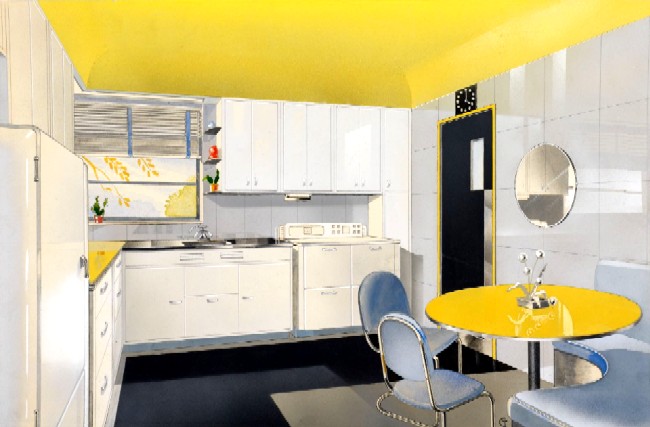
Conceptual Ktichen Sketch, Turzak Residence, Chicago, Illinois, Architect Bruce Goff, 1930s, Wolfsonian
Prior to the Interwar era, kitchens were almost entirely task-focused, unlike the family gathering spaces they have become today. Even in the homes of the wealthy, kitchens were usually staffed by servants. As a result, the kitchen was usually a simple, hidden room in most homes in the early 1920s. It was during the 1930s that home kitchens began to be more of a household hub, with spaces devoted to eating rather than only utilitarian food preparation. As the room gained greater importance, decoration began to appear to make it more comfortable.
The first major Interwar period transformation of kitchens
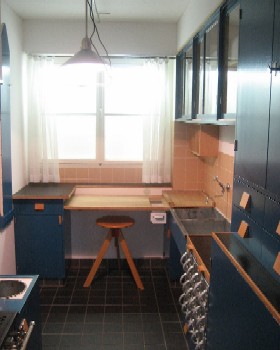
Reconstructed Frankfort Kitchen, Vienna,
Photo - Christos Vittoratos, Wikimedia
occurred in 1926 Germany. This was the result of the design plan for the 'Frankfort kitchen' by Austrian architect Margarete Schütte-Lihotzky for the New Frankfurt social housing project. She created an efficient cooking space inspired by the work of Frederick W. Taylor’s efficiency studies and a series of 1912 articles by Christine Frederick’s about applying Taylor’s methods to households. The result was compact and narrow with standardized built‑in cabinets on either side of the central aisle with the focus of the room being a centralized stove. This made the design more convenient, putting essential culinary items within easy reach. Cupboards contained dedicated spaces for frequently used ingredients. The design was installed in about 10,000 units in Frankfort, making it a model for the standard functional kitchen, designed almost exclusively as a workplace.
Although it was efficient, the Frankfort kitchen was also small and cramped. Its primary contribution to the 1930s kitchen was an interest in effective layout. Real kitchen decor transformation began in the latter half of the 30s as kitchen designs in Europe and America began incorporating fitted cabinets, integrated appliances and tables with seating. Families began gathering in this space for breakfast, making the need for pleasant décor more important. Such interior design elements were promoted in a variety of advertisements of the period.
The transformation of the kitchen into a decorated space was quite a gradual process, taking decades to come to arrive at the space we think of today. Kitchens in the early 1930s were simple and solid, lacking most decorative elements. While balances, the work-focus of the Frankfort kitchen was still present. They were built in small homes for busy families. Some Art Deco influences appeared in the early mid-1930s, although they were more subtle than those found in the 1920s. The room still sported clean lines with the more exotic designs.being found in flooring or backsplashes
Several specific elements can be identified from the images of 1930s Streamline Moderne style kitchens. Among them:
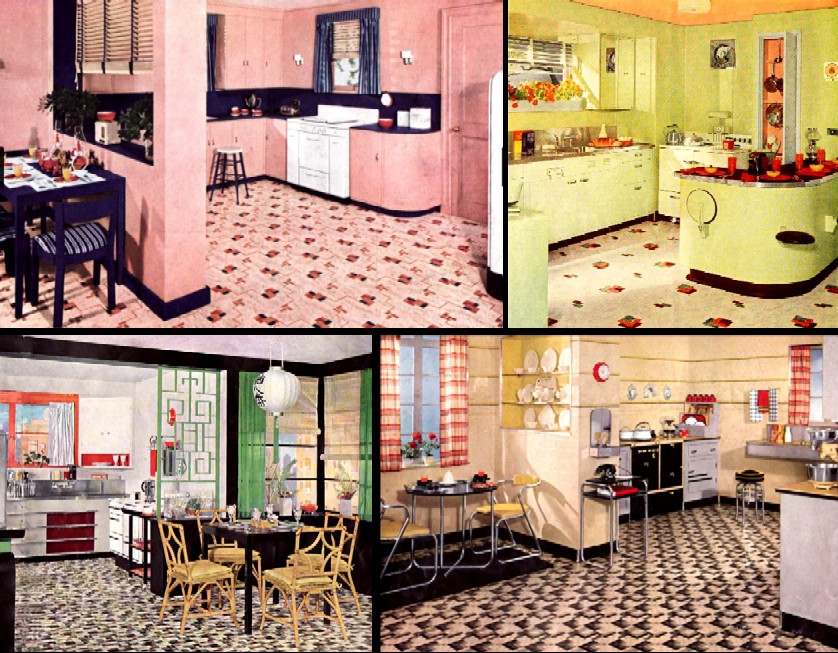 Kitchen Designs from 1930s Advertisements: <Top> Very Pink Kitchen with Linoleum and Curved Counters,, Nairn Linoleum, American Home Magazine, 1940, flickr; Linoleum Floor and Wall, Curved Counter with Flip-Down Seats, Armstrong, 'Dream Kitchens for 1939', p. 14.
<Bottom> Kitchen, Asian Themed, Armstrong, 1935; Chromed Tube Furniture with Off White Walls, Armstrong Linoleum, 1935, Both from flickr
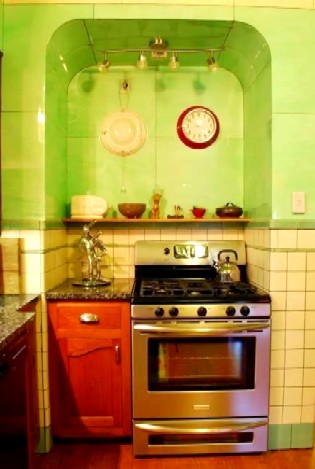
1930s Kitchen Design with Green Vitrolite Walls, Yellow
Tile
and Rounded Alcove, Apartment Therapy
Surfaces and Materials:
- Tiling in geometric patterns in backsplashes and on walls
- Linoleum floors with colorful geometric patterns,
- Innovative materials such as Bakelite, Chrome, Monel, and Vitrolite
Fixtures and Appliances:
- Large, deep sinks
- Black, grey or white enameled appliances
- Built-in cabinets, often up to the ceiling, with flat fronts and glass, nickel or brass hardware
Color and Light:
- Streamlined glass and metal lighting fixtures
- Casement, porthole and glass block windows
- Soft, pastel colors as well as some jewel colors
- Two-toned kitchen designs with cabinets and walls in one color and countertops and tiling in the other
Other Streamline Moderne elements were sometimes present in 1930s kitchens such as alcoves with rounded tops and cabinet/sink valences with rounded tops, porthole window doors and corner windows. These were not as common as those listed above.
Refrigerators were just beginning to appear during this period, although they would have been a luxury in the common home. The introduction of freon in the late 1920s resulted in the first practical home refrigerators appearing in the 1930s. While there were other types of home refrigerators available as early as the 1910s, they were expensive, complicated to install and contained dangerous coolants. The chaotic financial environment of the 1930s likely limited their purchase by many homeowners.
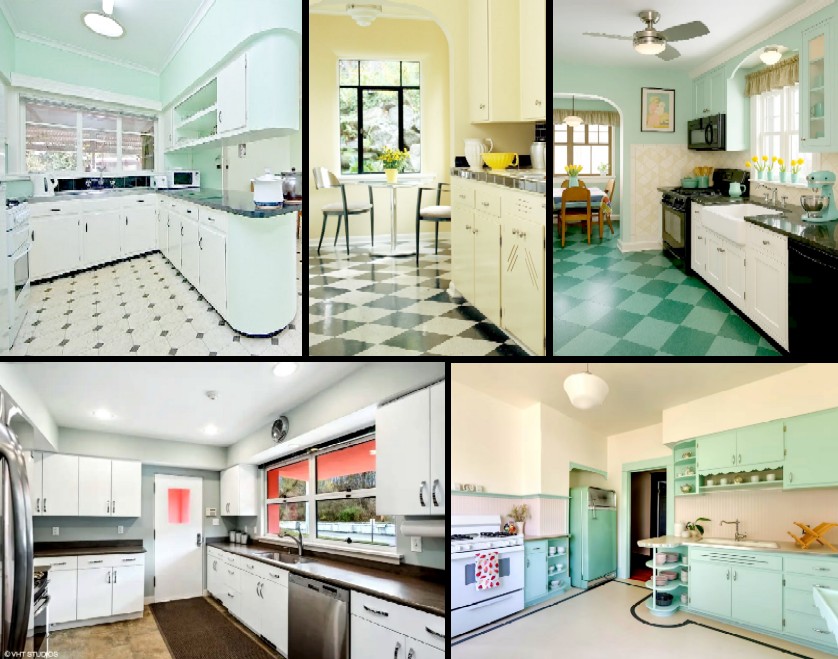 30's Style Remodeled Kitchens: <Top> Mint Green with Black Countertops and Tile, Curved Peninsula Cabinet, Linoleum, 30 Denbigh Street, Frankston, Australia, Realestate.com.au; Yellow with Black Tile, Linoleum, Casement Window, The Spruce; Green, Black and White, Linoleum, Tiled Pattern Wall, Modern Interpretation, Architecture Courses;
 <Bottom> Century of Progress Florida Tropical Home Kitchen, Coldwell Banker; Two Tone Green Black, Curved Shelving, Custom-Craft Linioleum, 1915 Home, Oregon Live
Note that since all of these kitchens are in modern houses, they have modern touches. Appreciate them for the 30s era elements which remain.
The 1930s (and early 1940s) kitchen was a steppingstone towards kitchen design, employing efficiency, modern materials, and subtle styling to make it more important in a household rather than a hidden space. The home kitchen really transformed after the end of the Second World War as women who had been working for the war effort continued on in the workplace. Following the war, optimism pervaded design, ushering bright colors into the kitchens of America.
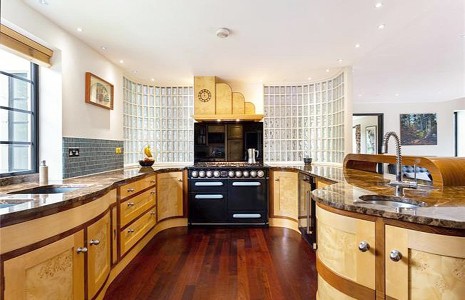
Modern and Classic Kitchen Elements, The Saltings, Hampshire, UK, Love Property
Sources Not Mentioned Above:
"1930s Kitchens: Everything You Need to Know" , Architecture Courses Online website, gathered 2-25-26
"The Frankfort Kitchen", Wikipedia, gathered 2-26-26
Anne Reagan, "A Brief History of the Kitchen", Porch.com, gathered 2-26-26 Erica Puisis, "Take a Look at These 1930s - 1940s Kitchens", The Spruce website, gathered 2-26-26
"Kitchens With a Sense of 1930's Style", My Consumer Voice website, gathered 2-26-26
"Refrigerator", Wikipedia, gathered 2-26-26
"Freon", Wikipedia, gathered 2-26-26
"The Fascinating History and Exciting Future of Kitchen Design: From Utility to Centerpiece", Rocky Mountain College of Art website, gathered 2-26-26
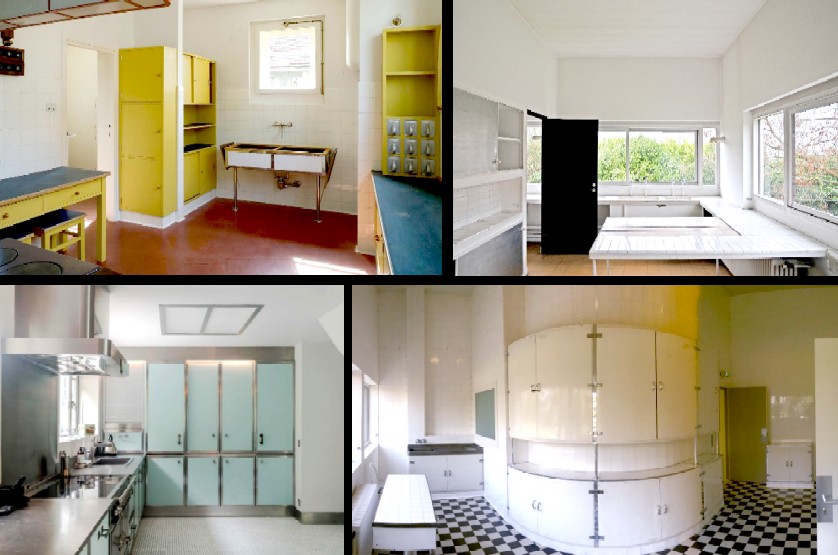 1930s Wealthy Home Kitchens: <Top> Villa Müller, Kitchen, Adolf Loos, Prague, Czech Republic, 1930, Design Mag; Villa Savoye, Designed by Le Corbusier, 1931, Flickr
<Bottom> High and Over Modernist House, Stainless Steel with Light Box Lighting, London, Designed by Amyas Connel, 1931, Rightmove; Villa Cavrois, France, Robert Mallet-Stevens, 1932, Irenebrination