Eugène Printz (1889 – 1948)
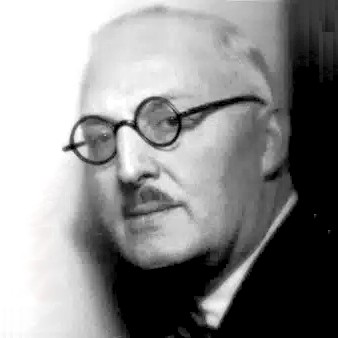
Eugene Printz, Galerie Chastel-Marechal
Eugène Printz was one of the most refined and technically accomplished designers associated with the Art Deco movement in France. Although less recognized than some of his contemporaries, his work stands as a sophisticated synthesis of traditional craftsmanship and modern design.
Printz was born in 1879 to a family of cabinetmakers. His father, Jean-Baptiste Printz, trained him in the rigorous techniques of fine woodworking giving him a deep respect for materials and precision. To learn his trade, he copied classical furniture, a training which would remain central to his identity as a designer. He was initially influenced by Art Nouveau, but he gradually moved away from its organic, sinuous forms towards a more structured and geometric Art Deco style.
Printz began working with designer Pierre Chareau in 1919, producing most of Chareau’s furniture designs during the next six years. The pair gained international recognition with their co-exhibit at the 1925 Exposition Internationale des Arts Décoratifs et Industriels Modernes in Paris. His furniture were included in Chareau’s office-library of the Pavillion for a French Embassy organized and sponsored by the Société des Artistes Décorateurs (SAD) and executed under the authority of the French Ministry of Fine Arts. This helped Printz’s reputation among elite clients, who valued the exclusivity and craftsmanship of his work.
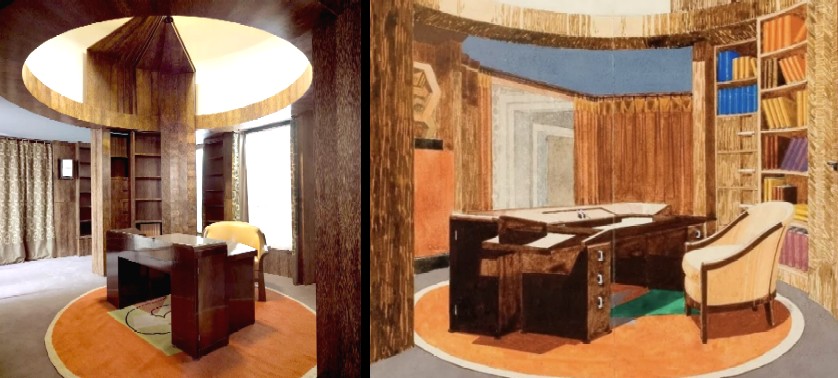
Furniture by Eugène Printz for Pierre Chareau, Office-Library of the Pavillion for a French Embassy, 1925 Paris Exposition -
At left: Recreation of the Room at the Museum of Decorative Arts, Paris. At right: Sketch of the room by Chareau from Itnerieurs et Coleurs, Plate 5.
Printz began publicizing himself in 1926 Printz with an exhibition of a Rosewood bedroom suite at Salon des Artistes Décorateurs. From that point on, he participated regularly in that salon. In 1928, he also exhibited at the Salon d’Automne and around the same period in the Salon des Tuilerie (an exhibit for artists and sculptors). These exhibitions were crucial for promoting his design work.
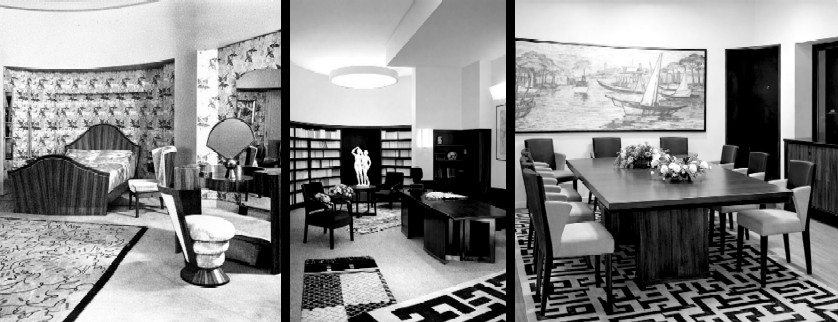
Eugene Printz's Displays at the Salon des Artistes Decorateurs, Paris in the 1920s - Printz, Circular Room with Wallpapered Alcoves, Bed and Vanity in Rosewood (1926), The Upholsterer and Interior Decorator, Volume 77, p. 124; Library for Debiesse, Round Reflector Light, Carpet by Evelyn Wyld, From Lux, June 1928, p. 89; Dining Room in Palm Wood for Princess de Wagram, Carpet by Evelyn Wyld, Cabinet by Jean Dunand, Painting by Rene Seyssaud, (1929), From The Studio, Vol. 98, p. 642;
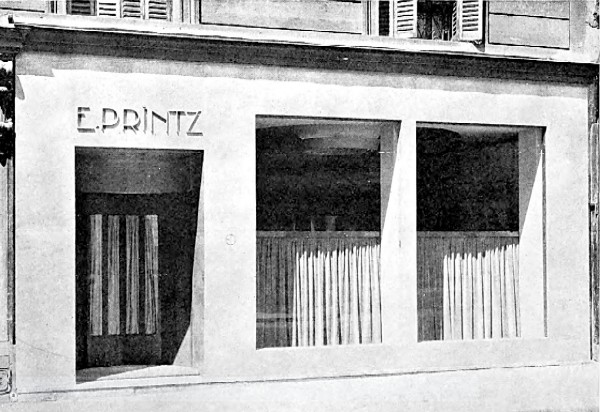
Eugene Printz's Store Front in Paris, From Good Furniture Magazine, January 1929, p. 27
1928 was an important year for Eugène Printz. He opened his own design studio Galerie Printz with his studio having more than 20 employees. This was also the year he began creating his own carpet designs which were manufactured at the Pinton workshop in Aubusson. 1928 also saw him recognized for his room lighting design, receiving an award for his indirect lighting from the Société pour l'Encouragement. As he explained in an article for the February 1930 magazine Lux, light must be “embedded within the architecture itself—a concept that necessitates a novel approach to architectural design and results in illumination via reflection—that is to say, indirect lighting.” (Eugene Printz, “Comment je conçois l'éclairage modern des intérieurs”, Lux; la revue de l'éclairage, Feb. 1930, p. 22)
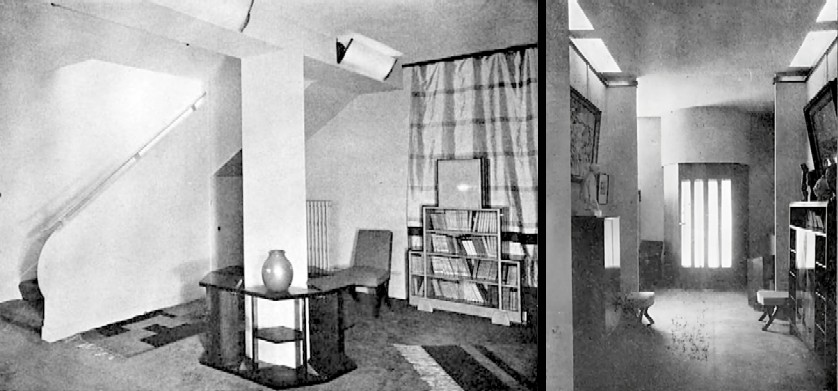
Eugene Printz's Store Interiors in Paris, From Good Furniture Magazine, January 1929, p. 28 <Left> Stair case and Display <Right< Entrance
Printz spent the next nine years designing furniture and creating rooms for a variety of clients, a period which culminated in his receiving the title of Knight of the Legion of Honour in 1937. Some of Printz’s projects during this period include:

Jean Lanvin's Office, Ebony Desk, Triptych Mirror, Wall-to-Wall Shelving, Built 1932,
AnOther Magazine
◆ A dining room suite in palm wood and decorated metal for Princess de Wagram. (1929)
◆ Stage sets for the drama Jean de la lune in the Comédie des Champs-Elysées. (1929)
◆ A complete apartment for Princess de la Tour d’Auvergne in the Palace of Grosbois. (1930)
◆ Furniture and design of Asia Salon (used as the reception salon of Field Marshal Lyautey) at the Palais de la Porte Dorée for the Colonial Exhibition. (1931)
◆ Design of the Cuban House banqueting hall at the Cite Universitaire. (1932)
◆ Design of fashion designer Jeanne Lanvin's office. (1932)
◆ Co-designed the lighting for the corridors and vestibules of the Pavaillion of Light with Etienne Kohlmann for the Paris Exposition Internationale des Arts et Techniques dans la Vie Moderne. (1937)
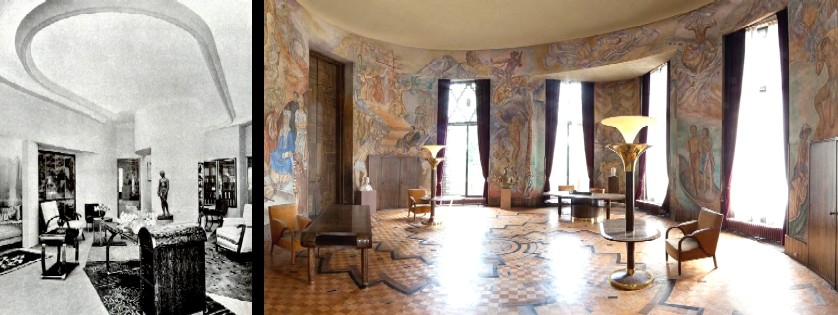
Room Designs by Printz: Living Room at Château de Grosbois of Princesse de La Tour d'Auvergne, Furniture in Palm Wood, Brazilian Rosewood and Metal, 1930, Instagram; Printz, Asia Salon at the Colonial Exposition, Marquetry Floor, Palmwood Furniture, Murals by André and Ivana Lemaître. 1931, Palais Port Doree
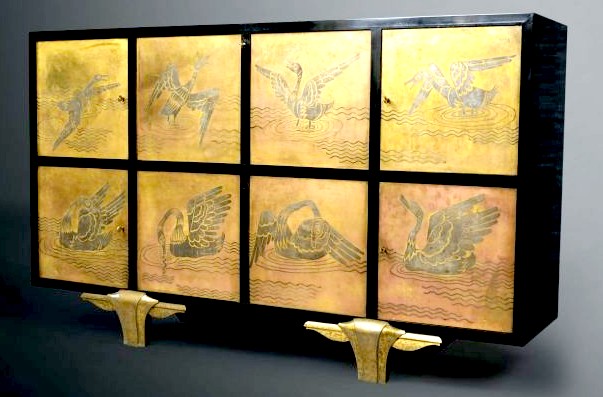
Secretary with Two Drop Doors, Black Lacquer with Sycamore Interior, Bird Scenes by Jean Dunand,
Gilt Bronze Base, 1930s, Le Magazine des Encheres
Printz produced a wide range of furniture, including cabinets, desks and dining pieces as well as complete interior designs. Numerous orders for his furniture came from from Mobilier National (National Furniture) and the City of Paris as well as for clients in America, Mexico, England, and Belgium. He often collaborated with other artists and designers to achieve a unified decorative effect, reflecting the Art Deco ideal of integrating architecture, furniture, and ornament into a cohesive whole. Among his collaborators was Jean Dunand, whose expertise in lacquer and metalwork complemented Printz’s mastery of wood. He also worked with noted rug and textile designers Hélène Henry and Evelyn Wyld to decorate his exhibits as seen in some of the previous images.
Printz’s furniture was characterized by clean lines, balanced proportions. Although they had strong geometry, his designs often incorporated subtle curves or softened edges preventing an overly rigid appearance. The furniture typically used rare and exotic wood veneers often chosen for their dramatic grain patterns. Among the woods he used were walnut, sycamore, wild cherry, rosewood, and palm kekwood. He often added luxurious accents such as ivory inlay, shagreen, and finely worked bronze mounts. Printz’s designs tended to be more restrained and architecturally composed than some of his contemporaries.
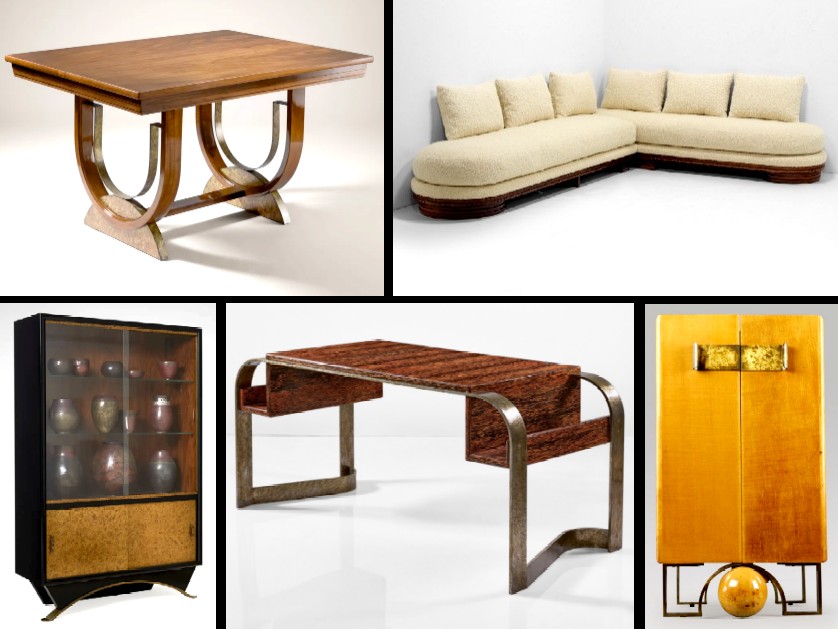
Furniture by Printz - <Top> Extendable Dining Table, Walnut Top with Oxidized Brass in Base, c. 1935, Galerie Marcilhac; Pair of Banquettes for Princesse de la Tour d'Auvergne, Wool Upholstery and Rosewood, c. 1930, Christies;
<Bottom> Display Cabine, Ebonized Wood with Sliding Glass Doors and Glass Shelves, Oxidized Gilded Copper Doors at Bottom, Bronze Hardware, c. 1934, Galerie Marcilhac; Desk with Side Shelves, Palmwood, Patinated Wrought Iron, c. 1932, Sotheby's; Printz, Side Table, Walnut with Bronze Support Frame and Hardware, Six Pivoting Drawers, Le Magazine des Encheres
Printz developed patented techniques related to veneer application and structural reinforcement, demonstrating a deep understanding of both the aesthetic and technical dimensions of furniture design. His wood finishes were particularly admired, ranging from highly polished, almost mirror-like surfaces to more subdued textures that emphasized the natural qualities of the wood. He designed unique furniture configurations as well. This combination of artistry and engineering distinguished him within the modern movement.
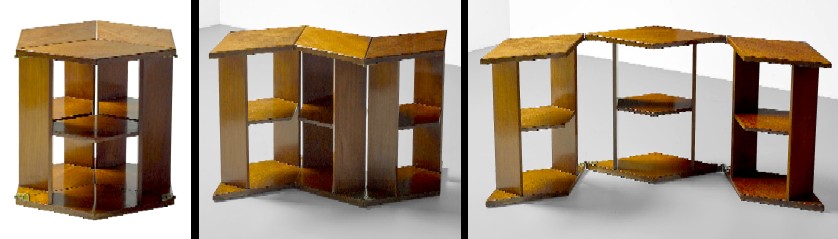
3 Part Folding Library Table in Various Configurations, Walnut with Patinated Bronze Hinges, c. 1930, Morateur
Printz continued to work into the 1930s, though the economic impact of the Great Depression led to a decline in demand for the kind of high-end, handcrafted furniture he specialized in. As design trends shifted toward greater functionalism and industrial production, his furniture style became less popular. He continued to operate his workshop until 1947, when he retired. He died in 1948, leaving behind a body of work that, while not as widely celebrated as some of his peers, represents a significant contribution to the history of decorative arts.
Sources:
“Eugène Printz”, Palais de la Porte Doree website, gathered 4-10-26
“Eugène Printz”, Galerie Marcilhac website, gathered 4-10-26
“Eugène Printz”, French Wikipedia, gathered 4-9-26
“Eugène Michel Printz - Life and Work”, Galerie Claude website, gathered 4-10-26
“Eugène Printz (1889-1946)”, Docantic website, gathered 4-10-26
Original Facebook Group Posting
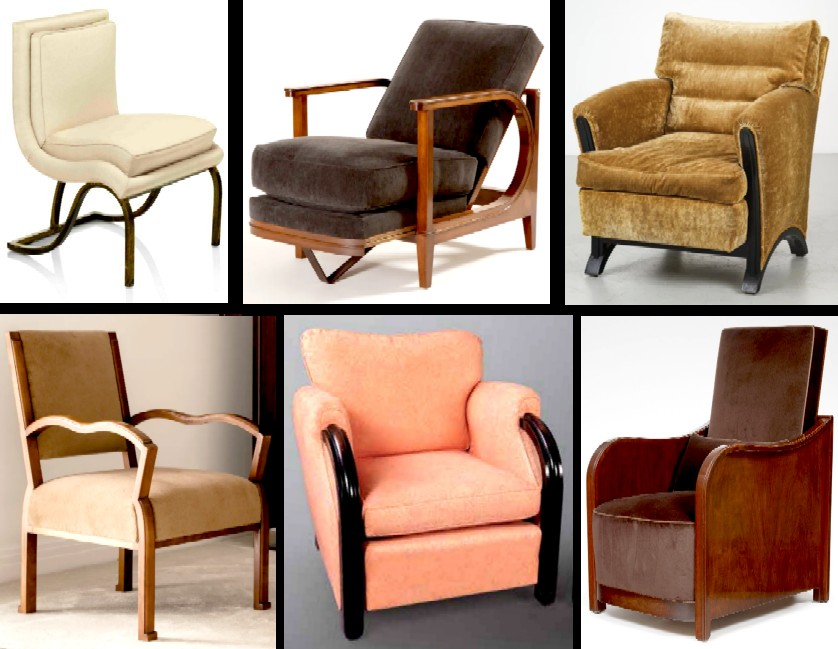
Chairs by Eugene Printz: <Top> Side Chair, Patinated Brass and Uphostery, c. 1930, Christie's; Reclining Chair, Walnut with Fabric Upholstery, c. 1930, Dutko; Armchair, Ebonized Wood, Fabric Upholstery, c. 1930, Dorotheum
<Bottom>
Armchair, Cherry Wood with Beige Fabric, c. 1928, Galerie Marcilhac; Armchair, Ebonized Pearwood, Coral Upholstery, Eugene Printz - Collection de Madame V, Arles Encheres Catalog, October 3, 2020; Reclining Armchair, Walnut with Fabric Upholsterym c. 1930, Artsy